Anchor points for fall protection Anchor points are indispensable when workers need to be reliably protected while working at height. They play a crucial role in safety and compliance in everyday work. This article explains what to consider when selecting and using anchor points to ensure maximum safety.
Basics: Anchor points for fall protection
Several crucial technical criteria play a central role in the design of anchor points. Anchor points for fall protection must meet the highest mechanical and static requirements to reliably protect employees from fall hazards.
The functionality of an anchor point is based on the precise transmission of force and energy absorption in the event of a fall. Key design principles include a robust load-bearing capacity, defined load directions, and a tested breaking load that significantly exceeds the expected loads. Static design and dynamic impact compensation are crucial in this regard.
Key requirements for anchor points include:
- High load-bearing capacity and resilience
- Compatibility with various personal protective equipment (PPE)
- corrosion resistance
- Easy verification of the safety function
- Documented certification according to relevant occupational safety standards
Modern anchor points are precisely developed for specific application scenarios – from scaffolding and industrial plants to complex infrastructure projects. Crucial to this is the engineering-supported design, which considers each anchor point as an integral component of a... holistic fall protection system understands.
Typical anchor points for fall protection and their properties
Anchor points for fall protection play a crucial role in the selection of suitable safety solutions, as they must meet different requirements depending on the application. Steel eyelets, truss anchor points, and mobile fastening systems form the core range of common safety solutions.
Steel eyelets are particularly suitable for permanent installations on roofs and industrial buildings. Their advantages lie in their robust construction and long-term stability. However, they require precise installation and can potentially damage the roof surface.
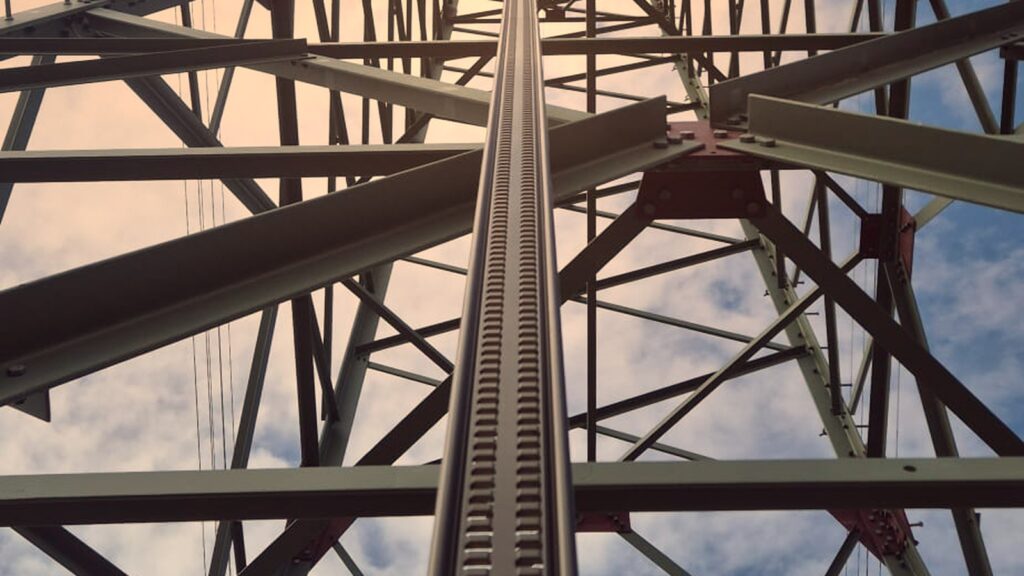
Truss anchor points offer a flexible alternative for complex industrial environments. They allow for variable positioning and can be attached to various steel structures. The disadvantage lies in the greater complexity of installation and, in some cases, the more stringent load-bearing capacity requirements.
Mobile anchor points Temporary systems or clamping devices are ideal for changing work areas. They are characterized by quick assembly and flexibility, but require careful checking of the substrate quality and load-bearing capacity.
The decisive factor for all variants remains the Ensuring load-bearing capacity and compatibility with individual personal protective equipment.
Placement and installation of anchor points for fall protection
Special care is required during placement and installation. Anchor points for fall protection must be professionally installed to ensure maximum safety when working at heights. Correct installation is crucial for guaranteeing maximum safety. Safety when working at heights.
The first critical aspect is the structural suitability the mounting surface. Load-bearing structures such as steel frames, reinforced concrete ceilings, or solid masonry elements must possess the required load-bearing capacity. The structural analysis must be carried out by a qualified expert to eliminate any risks.
Several crucial selection criteria apply to the specific positioning: The anchor point should be installed as directly above the work area as possible to minimize pendulum effects. The vertical distance between the anchor point and the work surface must be such that sufficient safety distance and room for movement are guaranteed in the event of a fall.
Precise assembly also means using high-quality fasteners. Special screws, anchors, and connectors must meet technical requirements and guarantee a minimum breaking load of 12 kN. Every connection must be executed according to standards and in accordance with the material.
Documentation of the installation by qualified specialists is the final, indispensable step in the proper installation of anchor points.
Regular inspection and maintenance
Long-term reliability depends on regular inspections. Anchor points for fall protection must be continuously monitored and documented to ensure their continued protective function. Safety professionals must conduct a comprehensive inspection at least annually, ideally every six months, to identify potential weaknesses or material fatigue early on.
Several crucial aspects must be considered during the inspection: First, a visual check should be carried out for corrosion, cracks, deformation, or wear at fastening points and connecting elements. Particular attention should be paid to welds, threaded connections, and fastening zones where material stresses can occur.
Documentation plays a crucial role: Every inspection must be precisely recorded, including the date, condition, and any repairs carried out. Information on the usage history and previous loads of the anchor points is also important.
Adherence to manufacturer-specific maintenance instructions is also essential. Worn or damaged components must be replaced immediately. If there is any doubt about functionality, immediate shutdown and expert inspection are recommended to avoid risks. Working at great heights to minimize.
Anchor points for fall protection are an essential component of effective fall protection for work at height. With correct selection, professional installation, and regular inspection, they provide reliable and lasting protection for employees.